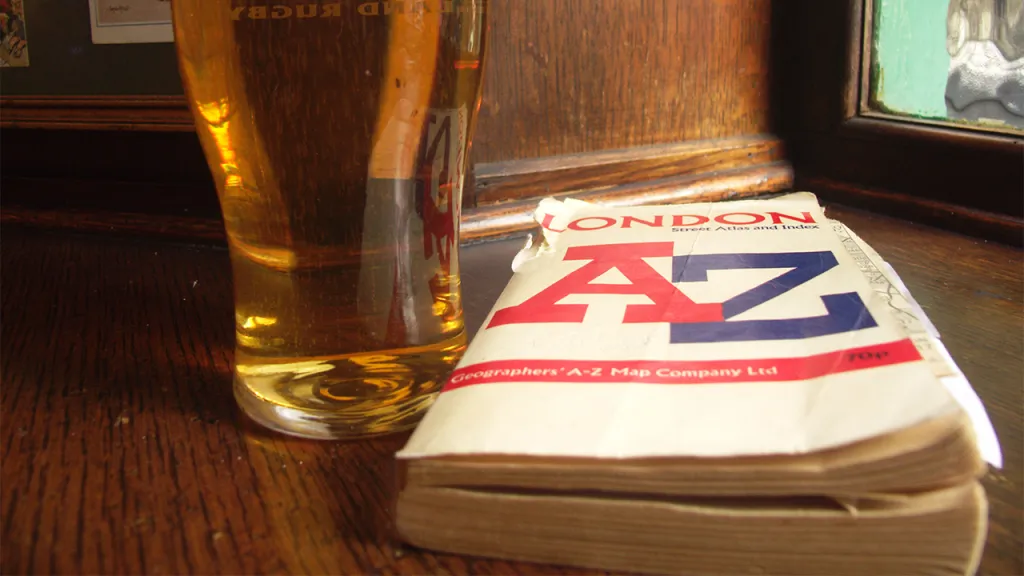
There was a time, before SatNav quietly took over the passenger seat, when getting anywhere unfamiliar took a bit more effort.
For those of you who remember, before SatNav we used something called an A-Z (in the UK)
You’d pull out the A-Z, flip through pages that were always thinner than you wanted, find your starting point, then trace the route with your finger.
You’d miss it, go back, try again. Sometimes you’d jot the key turns on a scrap of paper. Sometimes you’d just commit it to memory - left at the lights, straight over the roundabout, second exit after the petrol station.
And then you’d drive - no voice guiding you, no instant rerouting. Just you, the road, and a growing sense of awareness.
You started to notice landmarks, recognised certain turns. Sure, you got it wrong occasionally, but even that had value.
Do that journey a few times and something shifted. You didn’t need the A-Z anymore… you just knew the way.
Now we get in the car, type a postcode, and follow instructions. It works. It’s efficient. It gets you there, but ask someone to do that same journey again without guidance and most people would struggle. They arrived, but they didn’t really learn anything.
Branding has gone the same way.
We’ve never had more tools, more templates, more ways to get something out into the world quickly. You can generate a logo in minutes, build a website in an afternoon, put together something that looks, on the surface, like a finished brand.
And just like SatNav, it works.
You end up with something that looks right, feels coherent enough, and gets you from A to B, but here’s where it falls apart - No one remembers the route because no one really understood it in the first place.
Fast branding is often built on borrowed thinking.
It skips the part where you pause and ask the uncomfortable questions. What do we actually stand for, why should anyone choose us, what are we really trying to say?
Instead, it jumps straight to the output - Colours, fonts, layouts, logos - Directions without a destination.
And when that happens, the brand might look convincing, but it lacks weight. It doesn’t stick. It doesn’t guide decisions internally, and it doesn’t create real recognition externally - it gets you there, but it doesn’t teach you the way.
A more considered approach works differently. It starts before anything visual. Before the website, before the logo, before anything that looks like design.
It starts with understanding.
You map things out. You get clear on where you are, you decide where you’re going, you work out what matters and what doesn’t. You make deliberate choices that shape everything that follows.
It takes longer.
But it gives you something far more useful than speed - It gives you clarity., and clarity changes everything.
Internally, it gives direction. Decisions become easier, messaging becomes consistent, people pull in the same direction because the route is understood.
Externally, it creates recognition. Not just because it looks good, but because it makes sense. It feels intentional, it feels like it belongs.
People don’t just see it - they get it.
That’s the difference between following instructions and understanding the journey.
One gets you to the destination, but the other means you can find your way again, adapt when things change, take a different route if you need to and still arrive where you’re supposed to.
We’ve become very good at getting there, but the brands that last, the ones people remember, trust, and choose, are built by those who know the way.
And that doesn’t come from moving faster - it comes from thinking first.